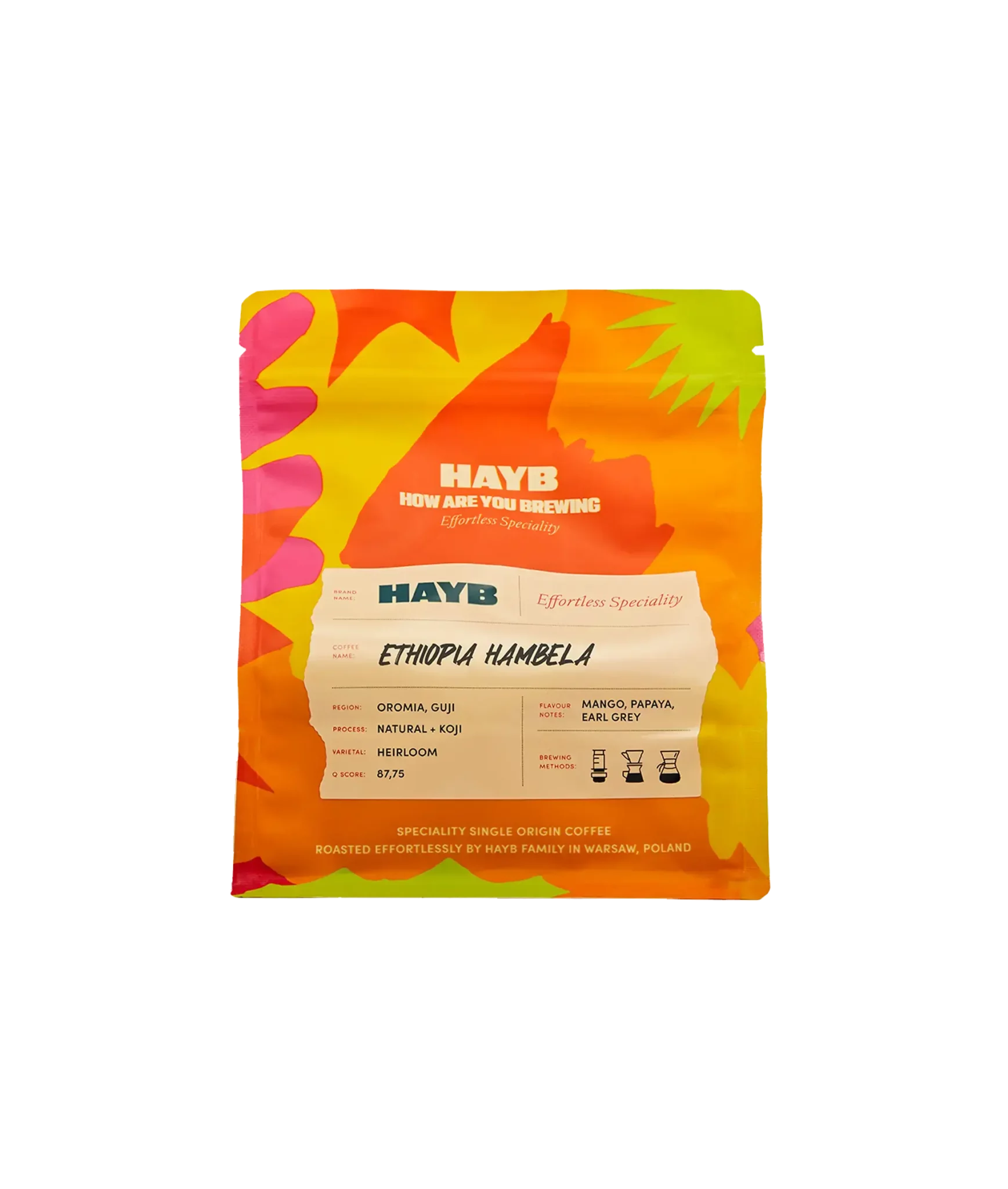

About this coffee
English description below
Z przytupem
Fermentowana z koji… Etiopia
No to po poniedziałku — jedziemy dalej, tym razem z przytupem! Uważam, że to świetny rok dla Etiopii: każdy lot, który wybraliśmy, od próbki po finalny wypał, dowoził na 100%. I tutaj nie było inaczej. Skusiła mnie obróbka, bo o ile w Kolumbii eksperymenty z bakteriami czy grzybami to codzienność, tak w Etiopii to wciąż rzadkość. Kawa numer 9 to Etiopia fermentowana z koji. Koji (Aspergillus oryzae) to grzyb dobrze znany w azjatyckiej kuchni — wytwarza enzymy rozkładające skrobię i białka, tworząc świetne warunki do fermentacji i budując bardziej złożone smaki. W kawie daje to zupełnie nowe możliwości: zmienia mikroflorę podczas fermentacji, co wpływa na słodycz, strukturę i aromat ziaren. Efekt? Filiżanka robi się pełniejsza, słodsza, soczysta — z nutami owoców pestkowych i tropikalnych, czasem lekkim umami, delikatną przyprawowością, a nawet echem miso. Złożona, odważna i długo pozostająca w ustach. Smak zależy oczywiście od szczepu koji, warunków i czasu fermentacji, ale jedno jest pewne: to fascynujący, smakowy eksperyment, który naprawdę robi robotę.
With a proper kick
Ethiopia fermented with koji
Monday’s behind us, so let’s keep the momentum going — this time with a proper kick! I honestly think it’s a fantastic year for Ethiopian coffees: every lot we picked, from sample to final roast, delivered 100%. And this one was no exception. What hooked me was the processing — because while Colombians love to tinker with bacteria and fungi like it’s their national sport, in Ethiopia this kind of experiment is still a rare sight. Coffee No. 9 is an Ethiopia fermented with koji. Koji (Aspergillus oryzae) is a fungus famous in Asian cuisine — it produces enzymes that break down starches and proteins, setting the stage for fermentation and building deeper, more layered flavours. In coffee, koji opens a whole new playground: it shifts the microbial environment during fermentation, which changes the sweetness, structure, and aroma of the beans. The result? A cup that’s fuller, sweeter, juicier — with notes of stone fruit and tropical fruit, a touch of umami, a hint of spice, and even a whisper of miso in the background. Complex, bold, and lingering. The flavour depends on the koji strain, the conditions, and the fermentation time — but one thing’s for sure: it’s a fascinating flavour experiment that really pays off.


