how origin shapes what's in your cup
the label says Ethiopia or Colombia or Brazil — but why does that change how the coffee tastes? a short, honest walk through what origin actually does to the cup.
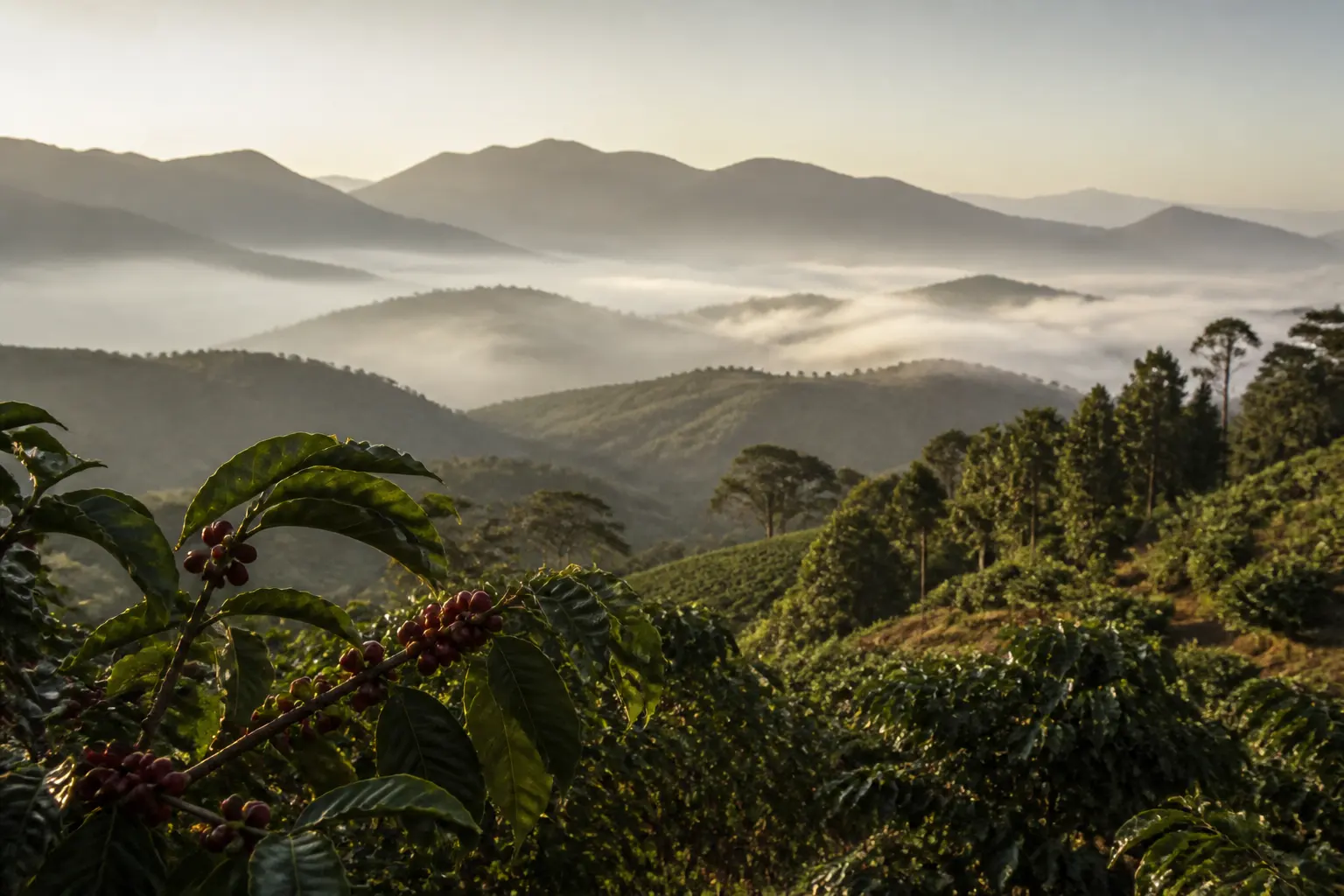
what "origin" really means
origin is shorthand for a bundle of growing conditions — altitude, soil, climate, and the local varietals farmers plant — that together shape a bean before it's ever roasted. two beans processed identically can still taste different because of where they grew; that's what buyers mean by terroir.
Ethiopia: floral, fruity, tea-like
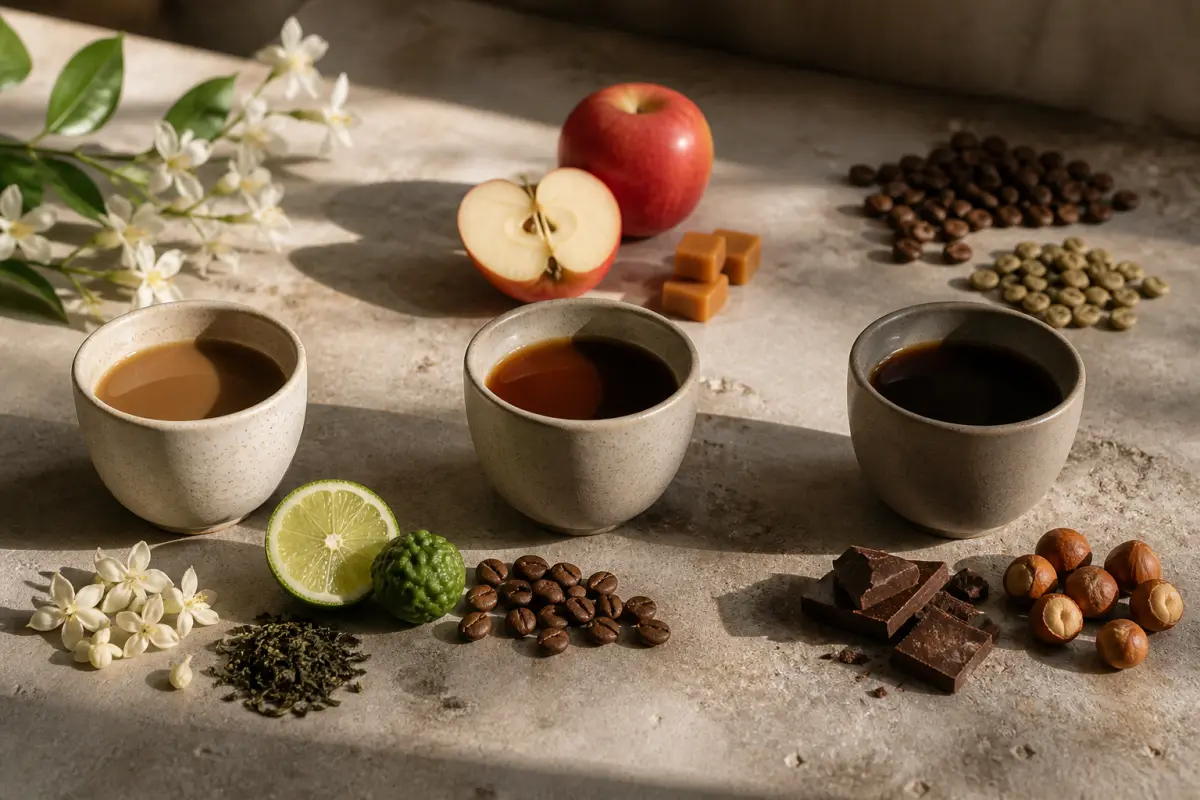
Ethiopia is coffee's birthplace, and its high-altitude farms (often 1,800m+) grow heirloom varietals found almost nowhere else. the result leans floral and fruity — jasmine, bergamot, stone fruit — with a light body and bright acidity, especially in washed lots.
Colombia: balanced, sweet, reliable
Colombia's Andean farms sit at a wide range of altitudes and produce mostly washed arabica with caramel sweetness, red-apple acidity, and a round, medium body — the reference point a lot of people picture when they think "good coffee".
Brazil: chocolatey, nutty, low acid
Brazil's lower-altitude, often flatter farms and natural/pulped-natural processing tend to produce a heavier body, low acidity, and chocolate-nut sweetness — the backbone of a lot of espresso blends, and an easy entry point if bright, acidic coffee isn't for you.
altitude, in one line
higher altitude generally means a slower-ripening cherry and denser bean — usually read as more complex acidity and sweetness. it's one input among many, not a scorecard, but it's the single spec worth learning to read on a bag.
some links may earn us a commission — it never changes what we recommend. how links work ↗